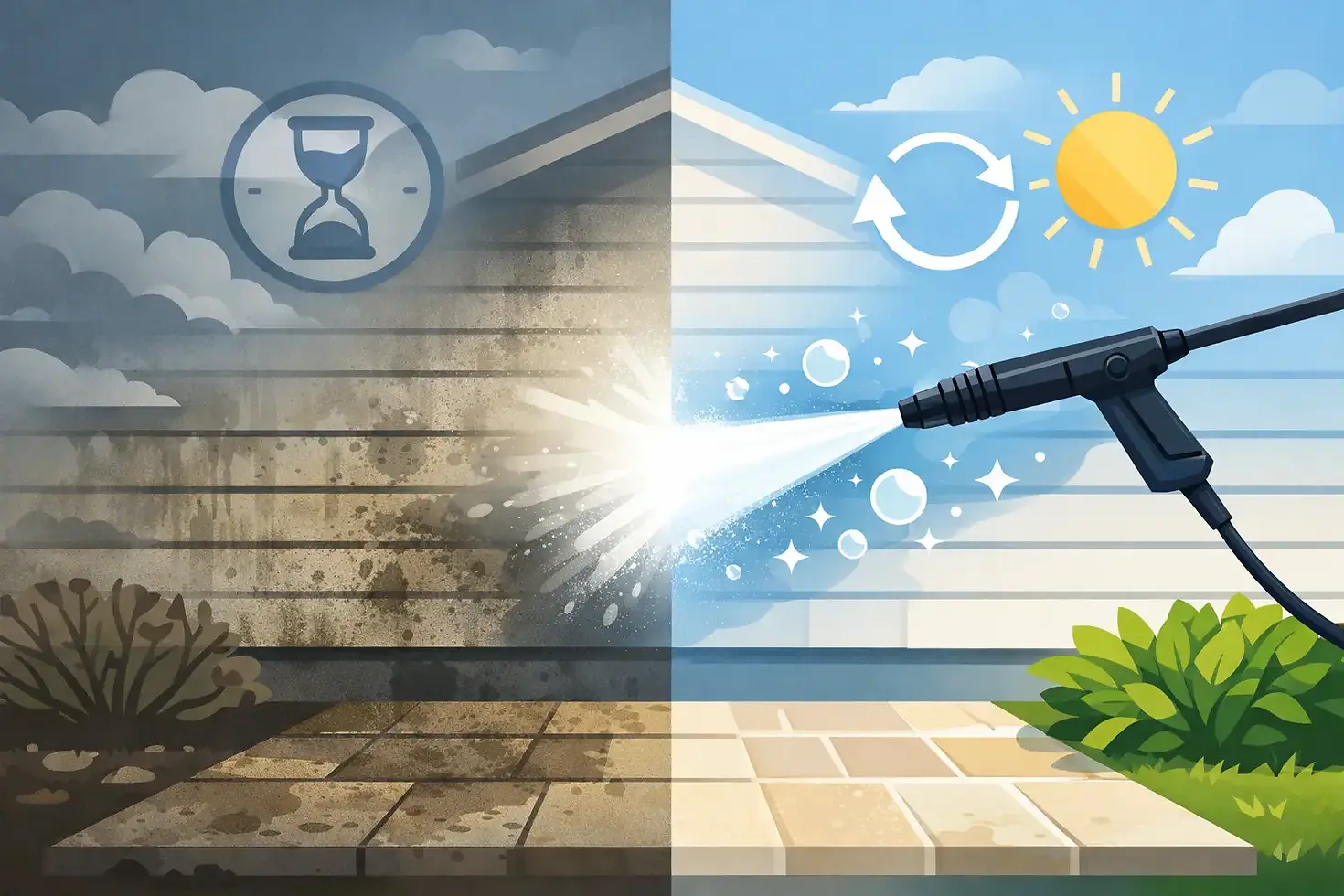
How Long Does Pressure Washing Last?
A driveway can look almost new the day it’s cleaned, then start losing that fresh look faster than expected in a shaded, damp spot. That’s why homeowners ask how long does pressure washing last - and the honest answer is, it depends on what was cleaned, how it was cleaned, and what your property deals with every season.
For most surfaces, the visible results of pressure washing can last anywhere from several months to two years. Concrete and hardscapes often stay cleaner longer than siding. Areas with heavy tree cover, constant moisture, or algae growth usually need attention sooner. If your home or commercial property sits in a humid part of Delaware or Southeastern Pennsylvania, that timeline can shorten fast.
The good news is that pressure washing is not just about appearance. Done at the right time and with the right method, it helps protect surfaces, reduce buildup, and slow down the kind of wear that leads to expensive repairs. That matters if you’re trying to preserve curb appeal and avoid unnecessary replacement costs.
How long does pressure washing last on different surfaces?
Not every surface holds results the same way. A front walkway, vinyl siding, cedar fence, and asphalt roof all age differently after cleaning.
Concrete driveways and sidewalks usually hold clean results the longest. On a property with decent sun exposure and moderate traffic, you may get 12 to 24 months before grime, mildew, or algae become noticeable again. If the concrete is shaded or surrounded by trees, buildup may return in under a year.
Vinyl siding often stays clean for 6 to 12 months, sometimes longer if the home gets good airflow and sunlight. North-facing walls are a different story. Those sections often collect algae and moisture faster, so discoloration can show up well before the rest of the house needs another wash.
Decks, fences, and other wood surfaces tend to vary the most. If the surface is untreated or older, it can attract dirt, mildew, and moisture more quickly. Results may look strong for 6 to 12 months, but the condition of the wood matters just as much as the cleaning itself.
Roofs should be treated carefully here. Many homeowners use the term pressure washing broadly, but asphalt shingle roofs should not be cleaned with high pressure. They require soft washing to remove algae and stains without damaging the shingles. When cleaned properly, roof results can last 1 to 3 years depending on shade, moisture, and surrounding vegetation. That’s one reason roof maintenance deserves its own plan instead of being treated like a basic wash-and-go service.
What affects how long pressure washing lasts?
The biggest factor is the environment around the property. Moisture, shade, pollen, tree debris, and air circulation all shape how quickly surfaces start looking dirty again.
If your home is tucked under mature trees, you’re dealing with more than falling leaves. You’re also dealing with less sunlight, slower drying times, and more organic material feeding algae and mildew. The same applies to properties near wooded lots, creeks, or heavily landscaped areas.
Material type matters too. Porous surfaces hold onto dirt and biological growth more easily than smoother ones. Older concrete, worn wood, and aging siding may stain faster than newer materials in better condition.
Then there’s the cleaning method. A fast, high-pressure rinse can remove surface dirt, but that doesn’t always mean the root cause is gone. Organic growth like algae, mold, and mildew often need proper treatment, not just force. If the cleaning only strips away the visible layer, the staining can come back sooner.
That’s where experience makes a real difference. The right approach is not always more pressure. In many cases, it’s the opposite. Using the correct method for the surface helps results last longer and helps protect the material underneath.
Pressure washing vs. soft washing - why the difference matters
If you want a realistic answer to how long does pressure washing last, you have to separate pressure washing from soft washing.
Pressure washing is best for durable surfaces like concrete, stone, and some masonry. It uses higher water pressure to remove dirt, grime, and surface buildup. On the right material, it delivers strong immediate results.
Soft washing is designed for more delicate surfaces like siding, stucco, painted exteriors, and especially roofs. It relies on lower pressure and professional cleaning solutions to kill algae, mold, mildew, and bacteria at the source. That often gives you longer-lasting results because the growth is treated, not just blasted off.
This is where property owners can make an expensive mistake. Using high pressure where it doesn’t belong can shorten the life of the material you’re trying to improve. It can strip granules from shingles, damage siding, force water behind exterior panels, and leave wood rough or scarred. A clean surface is only a win if the cleaning process doesn’t create a repair bill.
Why some homes get dirty again so quickly
Sometimes the service was done correctly, and the surface still starts showing buildup sooner than expected. That does not always mean the job failed. It usually means the property conditions are working against you.
A north-facing wall that barely sees sunlight is almost always going to stay damp longer. A roof under overhanging branches is going to collect more debris and hold more moisture. A driveway with poor drainage may darken faster because water sits on the surface instead of running off.
Seasonal timing can play a role too. If you clean in early spring, you may get hit with months of pollen, rain, and humidity right after. If you clean in late fall, winter moisture and debris may limit how long the fresh appearance lasts. In areas like Greenville, Montchanin, West Chester, and Malvern, mature trees and upscale landscaping look great, but they can create ideal conditions for recurring algae and mildew.
That’s why maintenance matters more than one-time cleaning. Most exterior surfaces stay in better shape when they’re cleaned on a schedule instead of being left alone until staining gets severe.
How to make pressure washing results last longer
The first step is choosing the right service for the surface. Concrete can handle a different approach than siding or roofing, and treating them the same usually shortens the result or risks damage.
The second is dealing with moisture and organic buildup around the property. Trimming branches, improving drainage, cleaning gutters, and reducing shade where possible can help surfaces stay dry longer. Dry surfaces are less inviting to algae, mildew, and grime.
Protective treatments can also help in some cases. Sealing concrete after cleaning may extend the clean look and reduce staining. Staining or sealing wood can help it resist moisture and dirt. Roof-focused maintenance can do even more. If your roof is aging, regular care and rejuvenation can help extend its service life and delay replacement by years, which is a far better financial move than waiting for visible decline to turn into a full reroof.
Most importantly, don’t wait until every surface looks heavily stained. Light to moderate buildup is easier to remove, easier on the material, and often more cost-effective to maintain.
When should you schedule pressure washing again?
For many homeowners, an annual cleaning schedule is the sweet spot. It keeps the property looking sharp and prevents buildup from getting out of hand. Higher-moisture properties may benefit from more frequent service on problem areas, especially shaded siding, walkways, and roof sections prone to algae.
Commercial properties may need a tighter schedule depending on foot traffic, visibility, and branding concerns. A storefront, office, or managed property that looks dingy sends the wrong message long before the structure itself has a problem.
There is no one-size-fits-all timeline, but there is a simple rule: clean before buildup turns from cosmetic to costly. That’s especially true for roofs, where staining often signals biological growth that can shorten material life if ignored.
At Invigorate Pressure Washing, that preservation mindset drives everything. A clean exterior matters, but protecting the surface underneath matters more. That’s how property owners save money, extend material life, and avoid replacing what still has years left in it.
If you’re wondering whether it’s time to clean again, look at the shady sides first. They usually tell the truth before the rest of the property catches up.


Comments