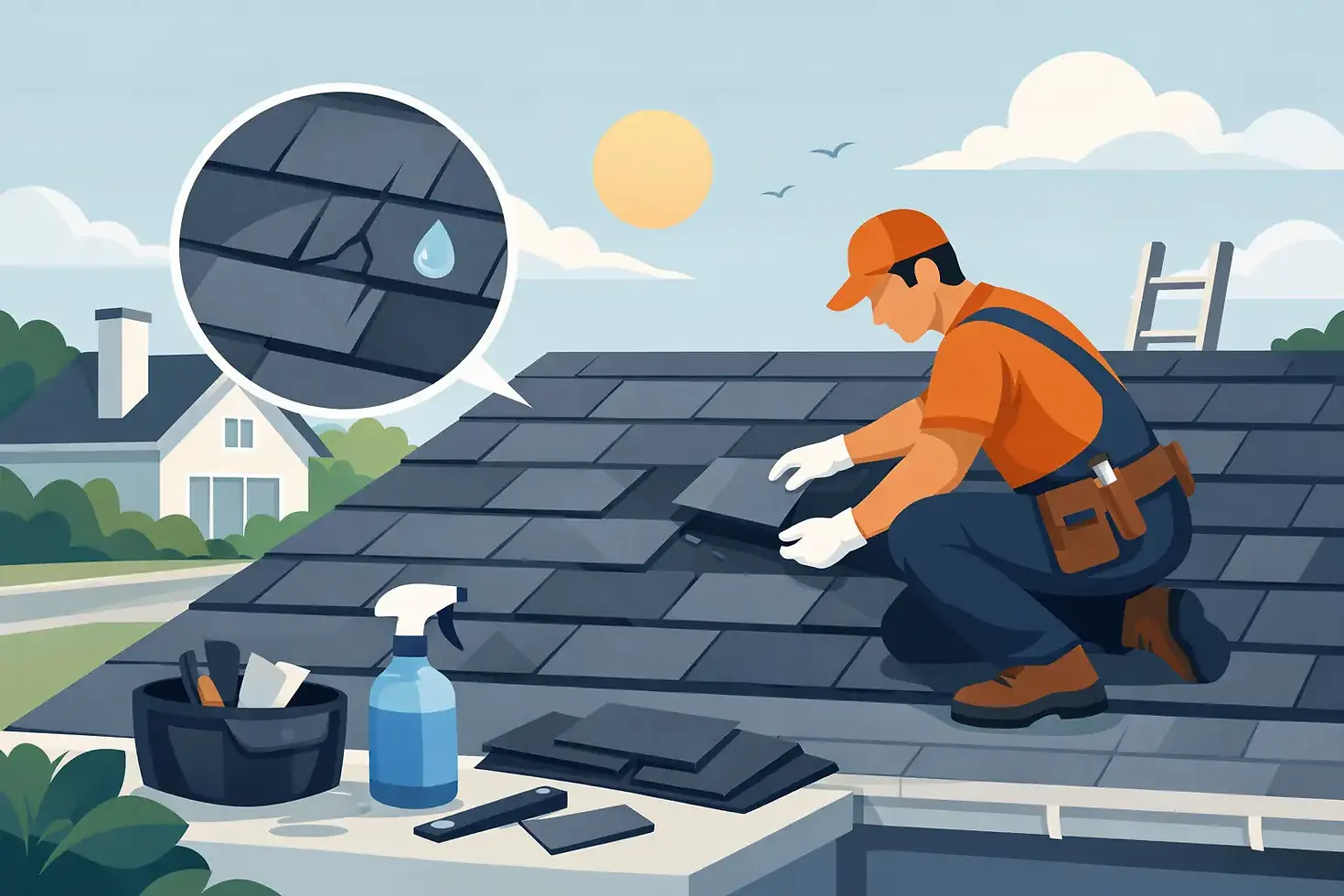
How to Maintain Asphalt Shingles Right
A roof usually starts asking for help long before it starts leaking. You see dark streaks, a little moss near the shaded side, grit collecting in the gutters, or shingles that do not sit quite as flat as they used to. If you are wondering how to maintain asphalt shingles, the goal is not to make an old roof look perfect. The goal is to protect what you have, slow down wear, and avoid paying for replacement sooner than necessary.
For homeowners and property managers, that matters. A neglected shingle roof can age fast, especially when moisture, algae, debris, and Delaware area weather all work together. The good news is that consistent roof maintenance is practical, affordable, and often far more valuable than waiting until damage becomes obvious.
Why asphalt shingle maintenance pays off
Asphalt shingles are built to take a beating, but they are not maintenance-free. Sun, rain, humidity, freeze-thaw cycles, tree cover, and poor drainage all shorten roof life over time. Most expensive roof problems do not begin with a dramatic event. They build slowly through trapped moisture, granule loss, clogged gutters, and organic growth that keeps the roof damp.
That is why maintenance saves money. A roof that stays clean, drains properly, and gets inspected regularly has a better chance of reaching its intended lifespan. In many cases, it can keep performing well beyond what homeowners expect. That means fewer repairs, less interior risk, and a much better shot at postponing replacement.
There is also a curb appeal factor that should not be ignored. Black streaks and algae staining can make a home look older and poorly kept, even if the roof is structurally sound. For higher-value homes in areas like Greenville, Montchanin, West Chester, and Malvern, roof appearance affects how the entire property is perceived.
How to maintain asphalt shingles without causing damage
The biggest mistake homeowners make is assuming roof maintenance means aggressive cleaning. It does not. Asphalt shingles can be damaged by high pressure, harsh scrubbing, and the wrong chemical mix. If the cleaning method removes granules, lifts shingle edges, or forces water underneath the roof system, the fix becomes part of the problem.
A better approach is preventive and controlled. Maintenance should focus on keeping the roof clear, spotting wear early, and using low-impact treatment methods when staining or biological growth appears. In other words, protect the shingles first and clean them second.
Keep the roof free of debris
Leaves, twigs, seed pods, and pine needles hold moisture against the shingle surface. That constant dampness encourages algae and moss growth and can speed up deterioration. Debris also tends to collect in roof valleys and near transitions, where water needs to move freely.
If debris is light and accessible from the ground, removal may be simple. If it requires walking the roof, caution matters. Foot traffic can loosen granules and crack older shingles, especially in hot or brittle conditions. On steep or aging roofs, this is often better left to a professional.
Keep gutters and downspouts flowing
Roof maintenance is not just about the shingles themselves. Gutters play a direct role in roof health. When they clog, water backs up at the roof edge and increases the risk of rot, leaks, and fascia damage. Overflowing gutters can also stain siding and create drainage problems around the foundation.
A clean gutter system helps the entire roof shed water the way it was designed to. If your gutters fill quickly because of nearby trees, they may need attention more than once a year.
Watch for algae, moss, and dark streaks
Those black streaks you see are often algae, not dirt. Moss is a different issue, and usually a more serious one, because it retains moisture and can push up shingle edges over time. Neither should be ignored.
The right treatment depends on the condition of the roof. Light staining may be addressed with a proper soft wash approach. Heavier growth or an older roof may call for a more careful maintenance plan that prioritizes preservation over appearance alone. This is where homeowners can save themselves a lot of money by choosing the right service instead of the harshest one.
Seasonal roof care that actually helps
When people ask how to maintain asphalt shingles, they often want a once-a-year checklist. In reality, roof care works better when you think seasonally.
In spring, look for debris left behind by winter storms, check gutters, and inspect for any lifted or cracked shingles. Spring is also a good time to address algae before heat and humidity make it worse.
In summer, tree limbs become a bigger concern. Branches that rub against the roof can wear down shingles and drop debris that traps moisture. This is also when heat can make shingles softer, so unnecessary foot traffic should be avoided.
In fall, leaf buildup becomes the main issue. Valleys and gutters should be cleared before winter so water can move off the roof instead of backing up. In winter, the focus shifts to spotting storm damage, monitoring attic ventilation issues, and watching for signs of ice-related stress after temperature swings.
This does not mean the roof needs constant attention. It means regular, simple maintenance beats expensive catch-up work every time.
Signs your shingle roof needs attention now
Some roof issues can wait for a planned maintenance visit. Others should be checked sooner. Granules in gutters, curling shingle edges, visible moss patches, dark streaking across large sections, and recurring damp spots in the attic are all signs the roof is under stress.
Age matters too. A newer roof with light staining may need straightforward cleaning and upkeep. An older roof that still has life left may benefit more from preservation-focused maintenance that helps restore flexibility and slow further aging. That is often where homeowners make the smartest financial decision. If the roof is not failing, replacing it may be the most expensive option on the table.
What homeowners should not do
There are a few shortcuts that cause more harm than good. Pressure washing an asphalt shingle roof is one of them. It may remove stains quickly, but it can also strip away protective granules and reduce the roof's remaining lifespan.
Another mistake is using off-the-shelf products without understanding how they affect surrounding landscaping, metal components, or the shingles themselves. Even if a treatment works on visible staining, it may not address the underlying moisture conditions that caused the problem.
Homeowners should also be careful about delaying maintenance because the roof is not leaking yet. By the time water makes it inside, the cost is usually higher and the repair options narrower.
Professional maintenance vs. replacement
This is where roof care becomes a real savings conversation. Not every aging roof needs to be torn off and replaced. Some need cleaning. Some need minor repairs. Some need rejuvenation to extend usable life and improve performance.
That depends on shingle condition, roof age, ventilation, drainage, and how much wear has already taken place. A roof with widespread structural failure is one thing. A roof that is weathered, drying out, and showing cosmetic wear is another.
For many property owners, professional roof maintenance is the middle ground that makes the most sense. It protects the existing asset, improves appearance, and can help delay a major capital expense. That is exactly why services centered on roof preservation continue gaining attention. At Invigorate Pressure Washing, that mindset drives everything from safe roof cleaning to ROOFLIFE+ rejuvenation - because saving a roof that still has value can save you thousands.
A practical maintenance rhythm for long-term results
If you want a roof to last, think in terms of rhythm, not reaction. Inspect it visually from the ground a few times a year. Keep gutters clear. Trim back overhanging limbs. Address algae and moss early. Have questionable areas checked before they become interior problems.
And if your roof is aging, do not assume replacement is your only path. There is a big difference between a roof that looks tired and a roof that is truly done. Good maintenance closes that gap. It keeps small issues from becoming expensive ones and gives your shingles the best chance to keep protecting your home for years longer than neglect ever would.
The best time to take care of an asphalt shingle roof is before it gives you a reason you cannot ignore.


Comments