How to Remove Efflorescence Safely From Brick
That chalky white film on brick, stone, or concrete is not just a curb-appeal problem. It is often a sign that moisture is moving through your masonry and leaving mineral salts behind. Knowing how to remove efflorescence safely protects the surface you paid for while helping you spot the drainage or moisture issue that may be feeding it.
For homeowners in Greenville, Montchanin, West Chester, and Malvern, exterior masonry is often a major part of the home’s character and value. Treat it carefully. Aggressive pressure, harsh acid, or the wrong cleaner can scar brick faces, weaken mortar joints, kill nearby landscaping, and turn a manageable cleaning project into an expensive repair.
What Efflorescence Is - and What It Is Not
Efflorescence is a powdery deposit of water-soluble salts. Water enters brick, block, mortar, pavers, or concrete, dissolves naturally occurring salts, then carries them toward the surface. When the water evaporates, the salts remain as a white or gray residue.
It is common after new masonry work, heavy rain, freeze-thaw cycles, irrigation overspray, or long periods of damp weather. In many cases, light efflorescence is cosmetic and temporary. But recurring buildup deserves attention because it can point to water entering where it should not.
Do not confuse it with mold, mildew, or algae. Organic growth tends to be green, black, brown, or dark gray and may look fuzzy, streaky, or slimy when wet. Efflorescence is dry, crystalline, and powder-like. The distinction matters because a treatment designed for algae will not necessarily remove mineral salts, and an acid cleaner used on the wrong stain can create unnecessary damage.
How to Remove Efflorescence Safely: Start Dry
The safest first step is also the simplest: let the area dry completely. Do not begin cleaning immediately after rain or while the masonry is visibly damp. Wet masonry can continue pulling salts to the surface, making the deposit return quickly.
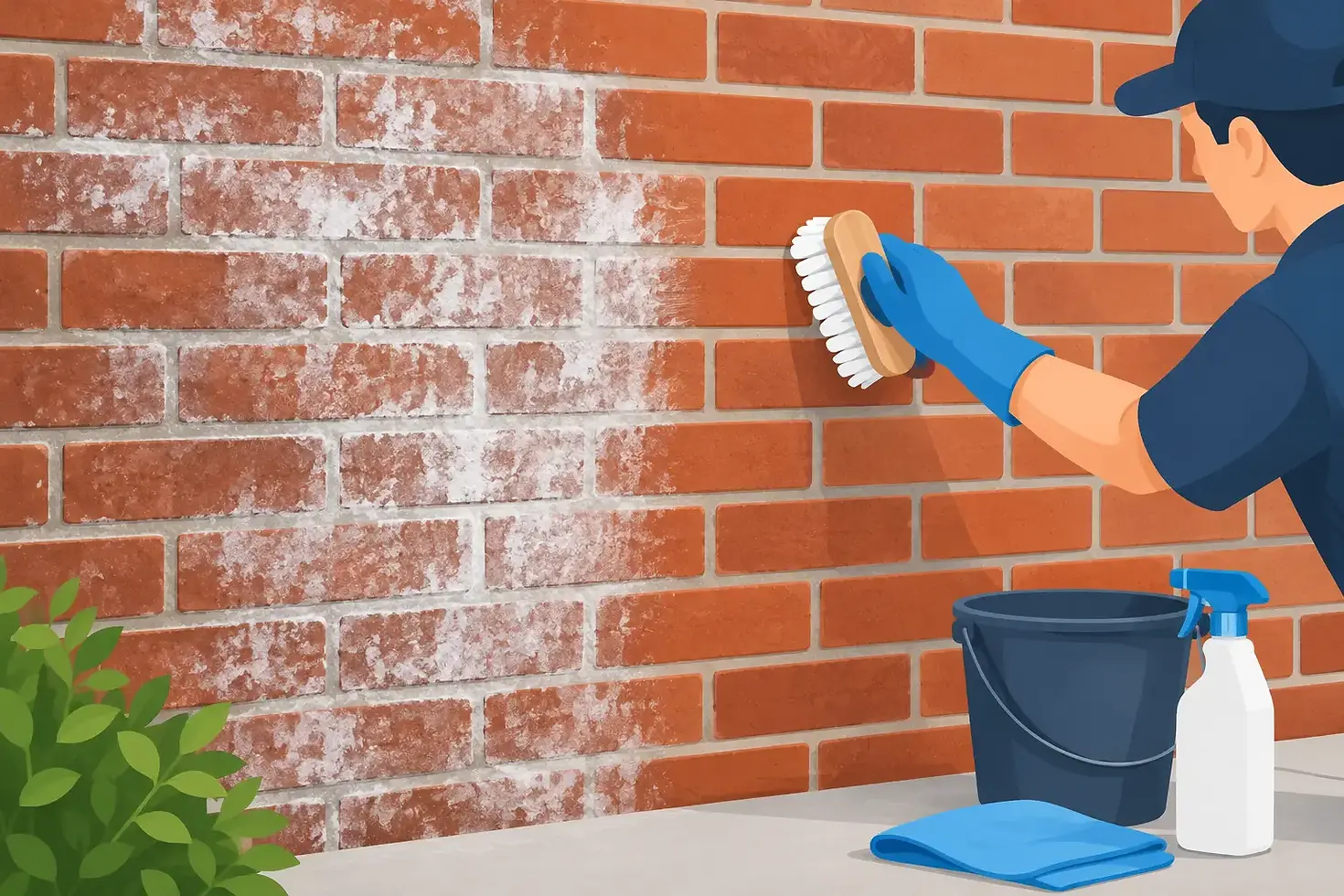
Once dry, use a stiff nylon brush to loosen the residue. Brush gently in small sections and sweep or vacuum up the powder rather than rinsing it into planting beds or across other surfaces. Avoid wire brushes. They can leave metal fragments that rust, scratch softer brick, and damage the finished face of masonry.
For light efflorescence, dry brushing is often enough. This method costs very little, creates no chemical runoff, and gives you a chance to inspect the masonry closely. Look for cracked mortar, spalling brick, open joints around windows, overflowing gutters, or downspouts dumping water near the wall.
If dry brushing removes most of the residue, wait a week or two before doing anything stronger. A small amount of remaining haze may weather away on its own, especially on newer brick or concrete.
Use Water Carefully, Not Aggressively
If brushing alone does not solve the problem, rinse the masonry with clean water at low pressure. A standard garden hose with a gentle spray setting is usually the right place to start. Work from the top down so loosened salts do not streak clean areas below.
The goal is to rinse away surface residue, not force water deeper into the wall. Keep the stream moving and avoid concentrating water on mortar joints, damaged brick, or cracks. After rinsing, allow the surface to dry fully before deciding whether another treatment is necessary.
A pressure washer can be useful on some durable concrete surfaces, but it is not automatically the answer for brick, older mortar, natural stone, or pavers. Too much pressure can etch concrete, blow out mortar, strip aged brick faces, and drive moisture further into porous materials. The surface may look cleaner for a day while becoming more vulnerable to future staining and water damage.
That is why professional exterior cleaning is about matching the method to the material, not simply using more force. The right pressure, nozzle, distance, and cleaning chemistry all depend on the surface condition.
When a Masonry Cleaner Makes Sense
Stubborn efflorescence sometimes needs a cleaner made specifically for masonry mineral deposits. These products are typically acidic, which is why they need to be handled with respect. Acid can remove salts, but it can also discolor masonry, weaken mortar, damage polished stone, etch glass, and harm plants if it is misused.
Before applying any chemical cleaner, test it on a small, hidden area. Follow the manufacturer’s dilution and dwell-time instructions exactly. More product or more time does not mean better results. It often means more risk.
Protect nearby doors, windows, metal fixtures, painted surfaces, and landscaping. Thoroughly wet surrounding plants with clean water before beginning, then rinse them again when the work is complete. Wear chemical-resistant gloves, eye protection, long sleeves, and footwear that provides good traction on wet surfaces.
Never mix cleaners. In particular, do not combine acidic masonry products with bleach, ammonia, or other household chemicals. Dangerous fumes can form quickly. If you are uncertain about the product, the surface, or the source of the white residue, stop and get professional guidance before applying anything.
Surfaces That Need Extra Caution
Some materials should not be treated with a typical acidic efflorescence cleaner without expert evaluation. Limestone, marble, travertine, and other calcareous natural stones can etch badly. Historic brick and soft, deteriorated mortar can also be permanently damaged by acid or high-pressure rinsing.
Pavers add another consideration. If the joints are filled with polymeric sand, aggressive washing or acid treatment can break down the joint material and lead to shifting or weeds. Decorative concrete may have sealers, color hardeners, or coatings that react poorly to cleaning chemicals.
When the surface is valuable, old, already damaged, or difficult to replace, the lowest-risk choice is a professional assessment. Saving a few dollars on a cleaner is not a win if the repair requires repointing mortar or replacing stone.
Fix the Moisture Source or Expect It to Return
Removing the white residue improves appearance, but it does not automatically stop efflorescence. The long-term solution is controlling the water that carries salts through the masonry.
Start with the obvious exterior sources. Make sure gutters are clean and draining properly, downspouts discharge away from the foundation, and grading slopes away from the home. Check irrigation heads for overspray on walls, steps, and walkways. Repair leaking hose bibs, cracked caulk around penetrations, and damaged flashing that lets water enter behind masonry.
On retaining walls and paver patios, drainage is especially important. Water trapped behind a wall or below a patio can keep moving through the materials for months. In those cases, surface cleaning alone will not provide a lasting result.
New masonry can also produce efflorescence as it cures and dries. If there are no leaks or drainage problems, patience may be the best treatment. Repeatedly applying strong cleaners to a new wall can do more harm than the salts themselves.
Signs You Should Call a Professional
A single light dusting is usually manageable. Repeated, heavy, or widespread deposits are different. Professional help is wise when efflorescence returns soon after cleaning, appears on interior masonry, accompanies flaking brick or crumbling mortar, or shows up alongside damp spots and water staining.
It is also smart to call for help if you are dealing with a tall wall, a chimney, a roofline, historic masonry, or a large commercial property. Access, runoff control, and material protection matter just as much as cleaning power. A trained exterior-cleaning team can identify whether the visible residue is simple efflorescence, hard-water scale, mortar haze, or a more serious moisture issue.
At Invigorate Pressure Washing, the focus is on protecting the property first and choosing the cleaning approach that delivers visible results without needless damage. That same preservation-first mindset applies to roofs, siding, concrete, and masonry.
Your brick, stone, and concrete should make the property look established and well cared for, not neglected. Remove the residue gently, address the water behind it, and do not let an aggressive cleaning shortcut create a bigger bill later.


Comments