Malvern Exterior Cleaning Guide for Lasting Curb Appeal
A well-kept Malvern property has to stand up to more than everyday dirt. Mature trees, shaded rooflines, humid summers, wet leaves, pollen, and freeze-thaw cycles all leave their mark. This Malvern exterior cleaning guide explains where buildup causes real trouble, what can be cleaned safely, and when preventive service can help you avoid a much larger bill later.
For homeowners and property managers, exterior cleaning is not just about making the house look better before guests arrive or a listing goes live. Done correctly, it is practical maintenance. It helps protect roofing, siding, gutters, walkways, and other surfaces that cost far more to repair or replace than to clean.
Start With the Roof, Not the Driveway
The roof is often the most expensive exterior component on the property, yet it is commonly ignored until staining becomes obvious from the street. Those dark streaks are not always dirt. In many cases, they are algae growth feeding on moisture and organic material. Moss and lichen can be even more concerning, especially on shaded sections where they hold water against the shingles.
A stained roof can hurt curb appeal, but the bigger issue is what prolonged growth can do to an aging roof system. Moisture retention, debris accumulation, and neglected maintenance can shorten the useful life of materials that should be protected.
Do not pressure wash asphalt shingles. High pressure can strip protective granules, damage shingle edges, and create problems that cleaning was supposed to prevent. Roof cleaning calls for a low-pressure soft wash process designed for the material and the type of organic growth present.
For a roof that is aging but still structurally sound, cleaning may be only one part of the plan. Roof rejuvenation treatments can help restore flexibility and extend shingle life, often helping owners delay a costly replacement. It depends on the roof's condition, its age, and whether there is existing damage. A roof with widespread leaks, failed flashing, or serious shingle loss needs repair or replacement, not a cosmetic shortcut.
Match the Cleaning Method to the Surface
Exterior cleaning works best when the method fits the surface. Using too much pressure in the wrong place can turn a maintenance job into a repair project.
Soft Washing for Siding and Delicate Areas
Vinyl siding, painted trim, stucco, cedar, and many composite surfaces respond well to soft washing. This method uses low pressure and properly applied cleaning solutions to break down algae, mildew, pollen, and grime before rinsing it away.
The goal is not to blast contaminants off the surface. It is to remove them thoroughly without forcing water behind siding, stripping paint, or damaging caulking. A clean house exterior can immediately brighten the property, but safe application matters more than speed.
Pressure Washing for Hard Surfaces
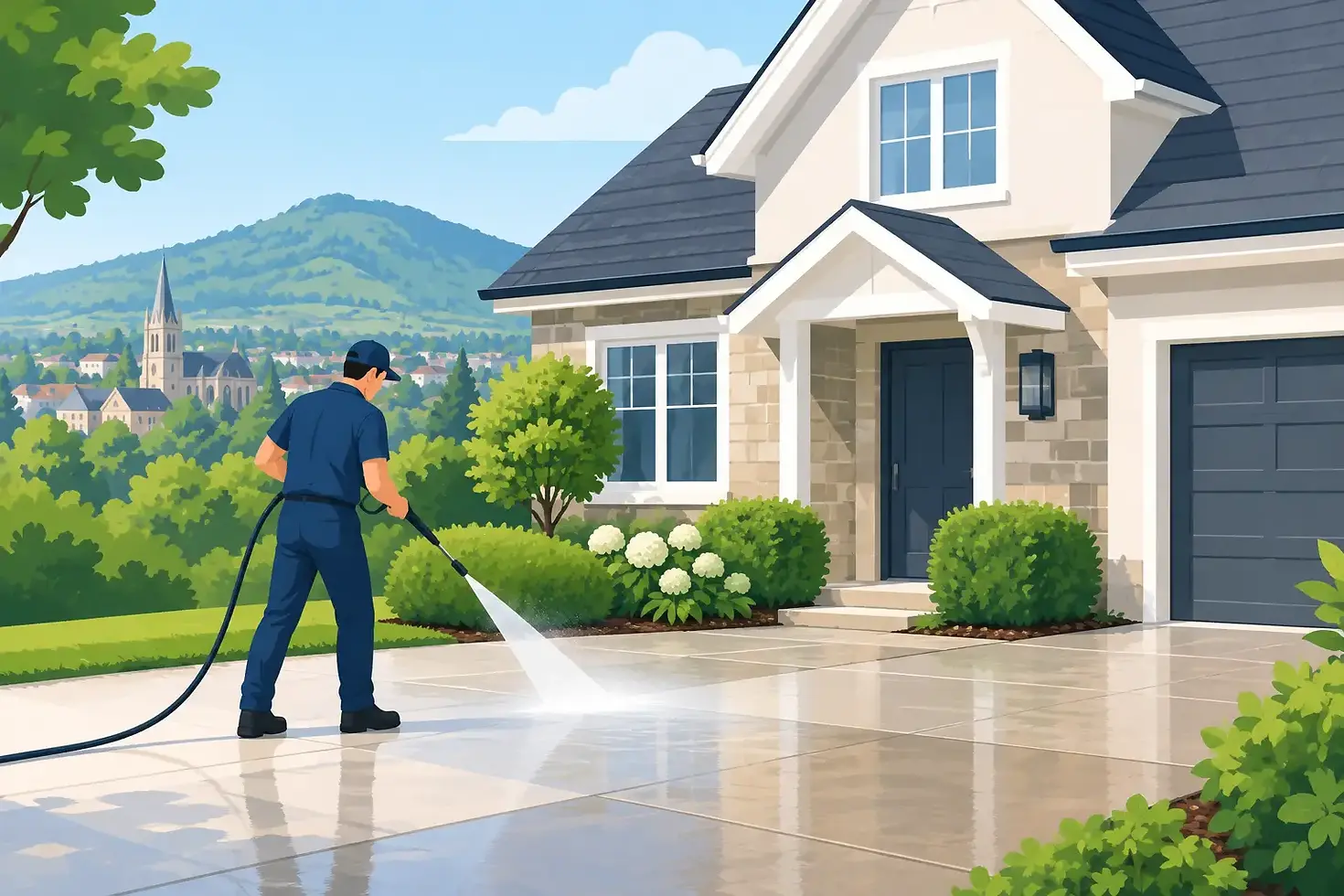
Concrete driveways, sidewalks, patios, brick, and certain stone surfaces can handle controlled pressure washing. These areas collect tire marks, muddy runoff, leaf stains, algae, and black mildew that can make an otherwise beautiful property look neglected.
Even here, more pressure is not automatically better. Older concrete, loose mortar, soft brick, and some natural stone require a careful approach. A professional should adjust pressure, water flow, and cleaning products to the surface rather than treating every driveway or patio the same way.
Gutter and Drainage Cleanup
Gutters are easy to overlook because the mess is out of sight. But clogged gutters can spill water onto siding, landscaping, foundations, and walkways. In neighborhoods with heavy tree cover, leaves and seed pods can build up quickly in spring and fall.
Cleaning the gutters is only part of the job. Downspouts should direct water away from the foundation, and roof valleys should be checked for trapped debris. If water is staining siding or overflowing near entryways, the problem may be drainage rather than the surface itself.
Watch for These Warning Signs
You do not need to wait until the whole exterior looks dirty. A few early warning signs can tell you that cleaning or maintenance should move up the priority list:
Dark roof streaks, moss, or lichen growth
Green or black algae on siding, steps, patios, or retaining walls
Overflowing gutters or water marks beneath gutter lines
Slippery walkways, especially in shaded areas
Rust stains, leaf tannin stains, or heavy runoff marks on concrete
These conditions are especially common after long stretches of rain or during humid weather. They also tend to return faster on north-facing sides of a home, beneath overhanging trees, and around areas with poor airflow.
Build an Exterior Cleaning Schedule That Fits Your Property
There is no single schedule that fits every Malvern home. A newer property in full sun may need less frequent washing than a heavily shaded estate surrounded by mature landscaping. Still, routine inspections keep small issues from becoming expensive surprises.
Walk the property at least twice a year. Spring is a good time to assess pollen, winter grime, roof debris, and drainage issues. Fall is the time to clear leaves, check gutters, and remove organic material before winter moisture settles in.
House washing is often needed every one to two years, although homes with substantial shade or visible algae may benefit from annual service. Concrete and patios should be cleaned when buildup becomes noticeable or slippery. Roof cleaning frequency depends on tree cover, roof pitch, material condition, and how quickly algae returns.
The best approach is preventive, not reactive. Waiting until stains are severe usually means more buildup, more labor, and a more noticeable impact on the property's appearance. Regular care keeps the job manageable and helps preserve the finishes you already paid for.
Protect Landscaping During Exterior Cleaning
Quality exterior cleaning should leave the property cleaner without creating problems for plants, grass, or surrounding finishes. Before work begins, nearby landscaping should be watered, sensitive plants identified, and exterior outlets or vulnerable areas protected as needed.
After cleaning, a thorough rinse helps keep residual product off foliage and hardscape. Homeowners can help by moving patio furniture, vehicles, potted plants, and decorative items away from the work area before the crew arrives.
This is also why do-it-yourself chemical mixing can be risky. A solution that is too strong, applied incorrectly, or left to dry where it should not can damage paint, landscaping, or surfaces. Store-bought equipment also rarely provides the controlled results needed for roof work or large-scale cleaning.
When Professional Service Pays Off
A small patio rinse may be a reasonable weekend project. Roof cleaning, multi-story siding, delicate stone, and commercial exterior washing are different. The right equipment, cleaning approach, and experience make a difference in both results and risk.
Professional service is particularly valuable when you see roof staining, recurring algae, steep rooflines, fragile exterior materials, or drainage-related messes. It is also a smart choice before putting a home on the market, hosting a major event, or addressing deferred maintenance at a rental or commercial property.
Invigorate Pressure Washing helps property owners throughout the PA/DE area clean and protect the surfaces that shape first impressions and long-term costs. For roofs that still have life left, the message is straightforward: DON'T REPLACE IT, REJUVENATE IT. A proper assessment can determine whether cleaning, maintenance, or roof rejuvenation offers the better financial path.
Your exterior does not need to look neglected before it deserves attention. Schedule service when you first notice staining, buildup, or drainage trouble, and you can protect your investment while keeping your property looking like the Malvern home or business it is.


Comments